
How CGI and AI Are Reshaping Creative Performance
Images aren’t decoration. They’re persuasion.
In categories like decking, facades, and home finishes, the right image can do what even the best sales pitch can’t, make people believe in a product before they ever touch it. That’s why forward-thinking brands are reimagining how creative gets made, turning technology into a performance tool.
Computer-generated imagery (CGI) gives marketers precision, realism, and control. Artificial intelligence (AI) adds speed, scalability, and imagination. Together, they’re redefining what creative can do and how fast it can move markets.
The Shift: From Art to Accelerator
For decades, creative was treated as a cost center or a “nice to have” that came after strategy and budget. But research from Marketing Architects (2024) shows that creative quality alone accounts for 37% of total sales lift. That’s more than media mix, spend, or targeting.
That makes creativity the single biggest lever of marketing performance. And it’s why tools like CGI and AI aren’t just changing how we create, they’re changing how we compete.
CGI: The Precision Layer of Creative Performance
In an age where physical prototypes, installations, and builds can take months, CGI allows brands to sell before reality exists. The technology has moved far beyond product rendering. It’s now a storytelling platform that merges architecture, lighting, and lifestyle into one seamless visual, even including photo realistic humans.

Steni Concept Wall
Take STENI, a European manufacturer of stone-composite façade panels. Before many of its new materials were even installed in the field, Steni commissioned a library of CGI renderings that showed how their products would look across schools, offices, and residential projects in daylight, at dusk, and under architectural lighting.
The impact was immediate: Architects could specify with confidence. Dealers could market with visuals that looked like real-world photography. And the brand could go to market months earlier, accelerating its sales cycle without compromising quality.
That’s creative as a performance accelerator.
CGI didn’t just make Steni look good. It made them faster, more consistent, and more persuasive.
AI: The Speed Layer of Creative Performance
Where CGI gives precision, AI gives velocity. Generative AI tools can produce concept visuals, color studies, and mood variations in minutes, compressing what once took weeks of design iteration into hours. But the real value isn’t in replacing human creativity. It’s in freeing it.
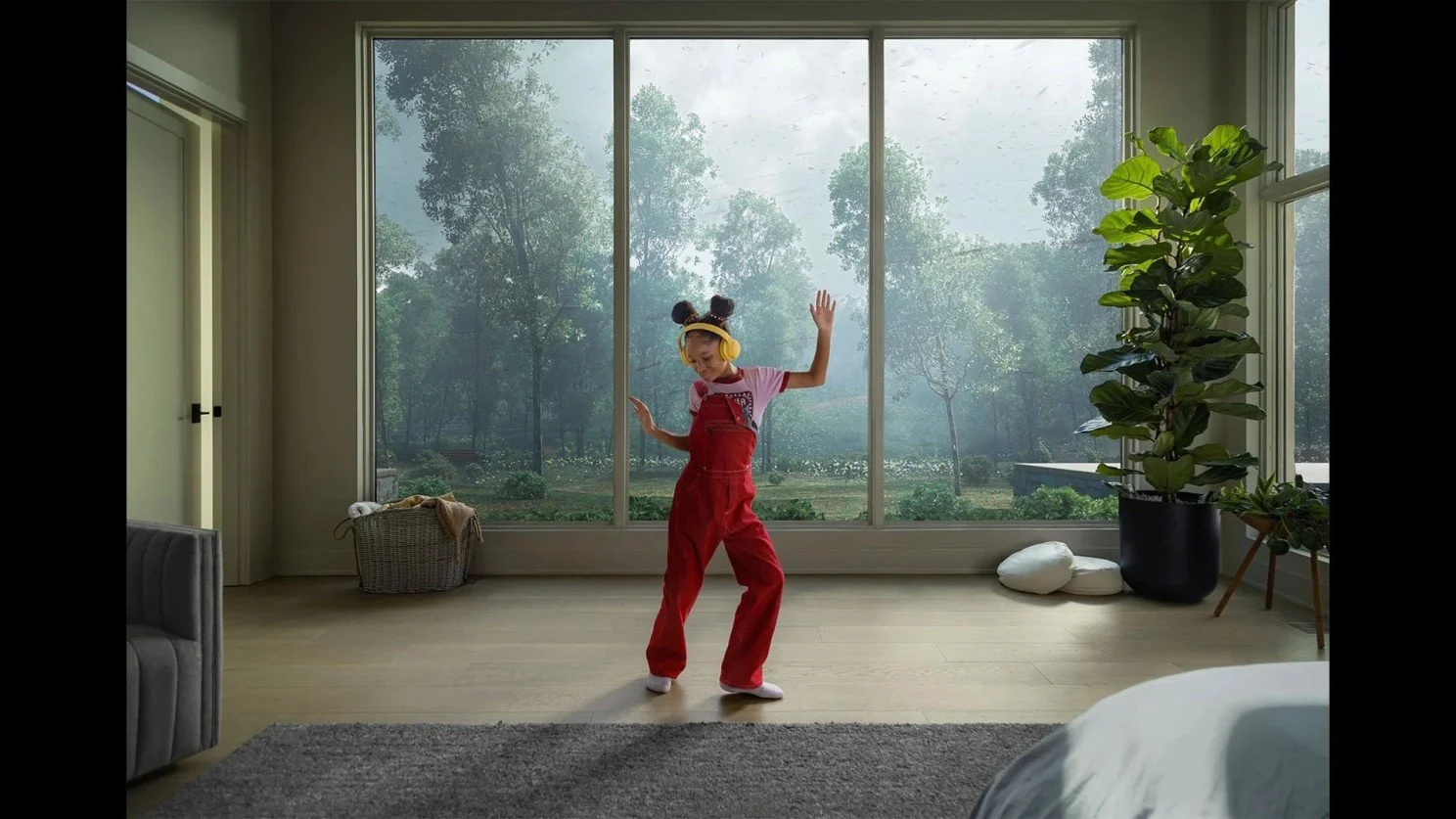
Pella Corporation’s “Make Life Brighter” campaign is a perfect example. Before committing to production, Pella used generative AI to test creative directions by experimenting with how light, weather, and emotion could shape the campaign’s look and feel. That experimentation guided the narrative before a single camera rolled.
The AI accelerated discovery. The humans delivered the storytelling.
The final campaign, a long-form film paired with national TV and digital that felt both cinematic and personal. And because the creative was refined early, the end result was stronger, faster, and more efficient.
That’s the hybrid model in action: AI as catalyst, human as conductor.
Creative Systems at Scale
This is where firms like Market Thrive CGI are pushing the frontier by combining CGI’s control with AI’s speed to help manufacturers scale creative without sacrificing brand consistency.

Their approach blends:
CGI libraries that render every product variation in perfect realism.
AI-assisted scene generation that builds contextual environments faster than traditional workflows.
Human creative direction to ensure every asset reflects brand, emotion, and intent.
The result: visual ecosystems that are cost-efficient, scalable, and always on-brand, enabling building-products marketers to refresh campaigns, dealer assets, and digital content in days instead of months.
For brands where the purchase journey involves multiple stakeholders (homeowner, dealer, designer, builder) that creative velocity is a competitive advantage. It’s what keeps awareness high and preference strong, even in slower cycles.
The Economics of Quality
The performance data backs it up. WARC’s 2025 TV as a Full-Funnel Channel study found that advertisers using high-quality creative and full-funnel media integration see ROI up to 17% higher than digital-only campaigns.
And Binet & Field’s IPA research showed that brands investing in both creative quality and consistent execution were 2.5× more likely to maintain price premiums and 3× more likely to grow profit share post-recession.
In other words, creative is a multiplier, not an expense. And technology is what makes it scalable.
Precision Meets Speed
CGI and AI aren’t in competition. They’re two halves of a faster, smarter, more effective creative process:
For Photorealism & Control use CGI. It ensures product accuracy, brand consistency, and emotional believability.
For Speed & Ideation use AI is best. It accelerates concept development and allows iterative testing before production.
For Storytelling & Cohesion, there's no better option thanhuman direction to align technology with intent, transforming visuals into persuasion.
This hybrid approach mirrors the broader evolution of marketing itself, from channel-centric to system-centric, from campaigns to ecosystems.
Creative isn’t just the last step in the process anymore. It is the process.
The Takeaway: Craft + Code = Performance
Technology may change the tools, but not the truth.
What drives results is alignment between creativity, technology, and brand strategy working together making performance inevitable.
That’s the future of marketing in this industry:
CGI gives brands the power to show what doesn’t exist yet.
AI gives them the speed to adapt to what’s next.
And creativity remains the constant, the multiplier that turns both into measurable growth.
The next wave of competitive advantage won’t come from who spends the most on media. It’ll come from who invests the most in creative systems that accelerate performance.
CGI and AI aren’t replacing creativity. They’re redefining what it can do.